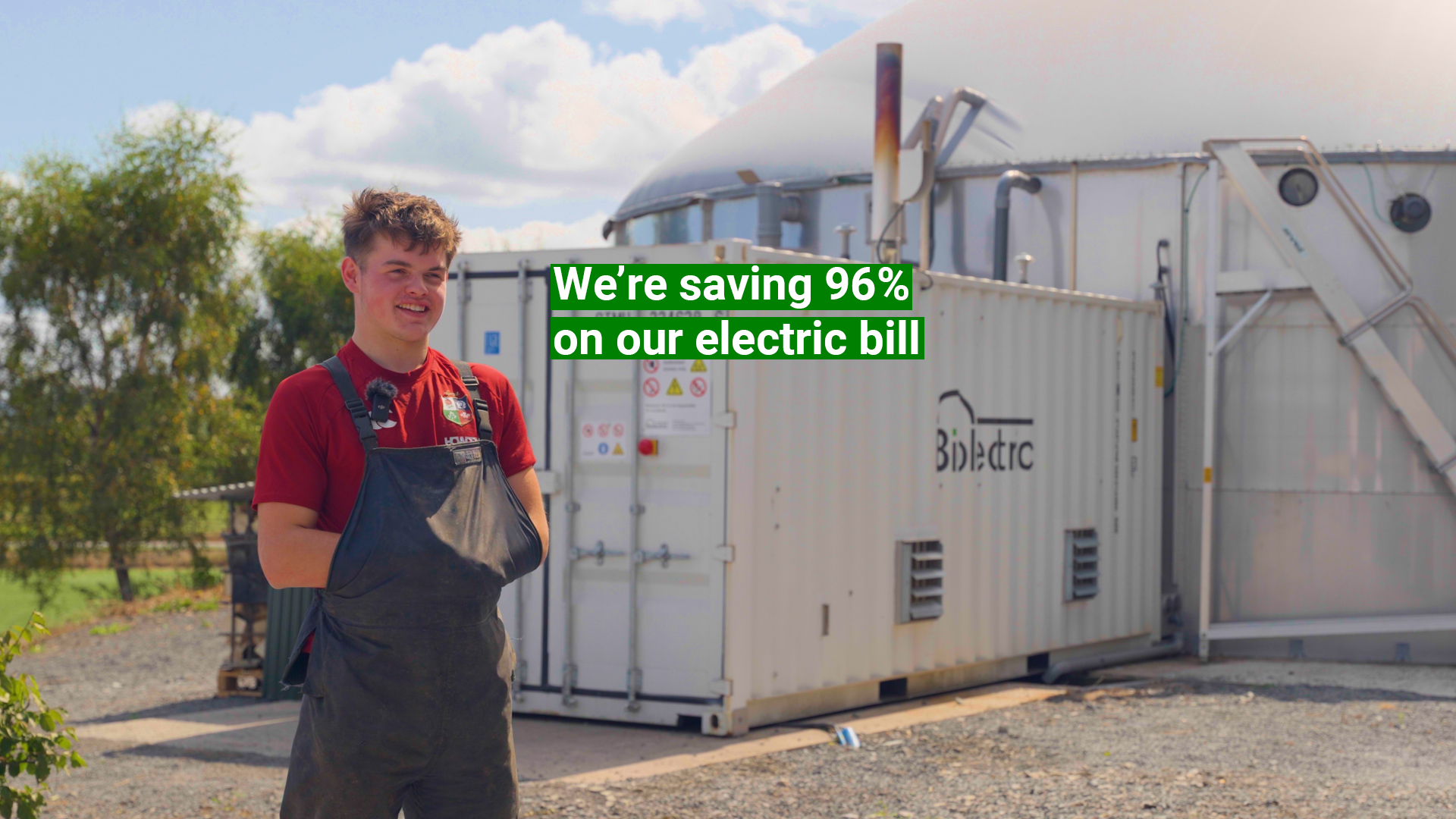
Rosconnor Dairies generates renewable electricity with Biolectric
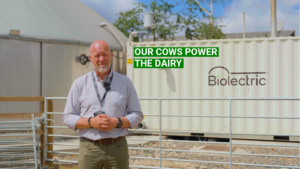
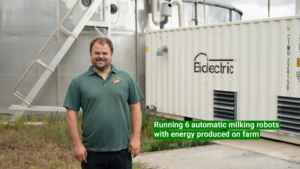
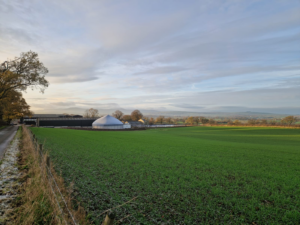
At Rosconnor Dairies, Sam Macauley and his team manage approximately 680–700 cows alongside a 44 kW Biolectric anaerobic digestion plant. By processing the farm’s cow slurry, the system generates renewable electricity, reduces energy costs and produces digestate that can be returned to the land.
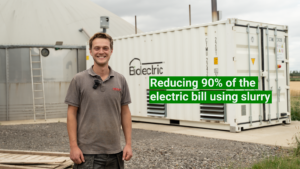
After operating an anaerobic digester for approximately seven to eight years, the farm recently installed a new plant. The results have been particularly impressive: Rosconnor Dairies has reduced its electricity bill by approximately 96% using electricity generated from its own agricultural waste.
“This new plant, we can’t complain. Ten out of ten.”
How the farm’s biogas system works
Rosconnor Dairies operates solid floors in the cow house. The slurry channels are scraped out and feed directly into the reception tank, where a pre-mixer prepares the material before it enters the digester.
The pre-mixer plays an important role in maintaining a consistent feedstock. It combines the slurry before it is pumped into the anaerobic digester, helping ensure that each feed throughout the day has a similar composition.
For Sam, consistency is one of the most important factors in reliable anaerobic digestion:
“It’s like a cow: if it’s fed the same thing all day, every day, you’ll have very few issues.”
A stable and predictable feed helps the Biolectric plant operate smoothly. In contrast, significant variations in water content, slurry thickness or feeding volumes can create unnecessary challenges for an anaerobic digestion system.
A 44 kW anaerobic digester for the dairy farm
The new Biolectric plant was installed in September, replacing the farm’s previous anaerobic digestion system. Although the old plant had provided value over several years, the farm identified areas where the system and its operation could be improved.
The new plant has delivered a more reliable performance and has made it easier for the farm to produce electricity on site. Rather than purchasing most of its energy from the grid, Rosconnor Dairies can use electricity generated from its own cow slurry.
The system currently supplies the vast majority of the farm’s electricity requirements. The remaining 4% of the electricity bill is mainly associated with the farmhouse, which has not yet been connected to the plant.
Once the farmhouse is connected, the farm expects to use electricity generated by the Biolectric system for almost all of its energy needs.

Saving 96% on electricity costs
Energy independence is one of the main benefits of installing an on-farm biogas system. At Rosconnor Dairies, the 44 kW anaerobic digester has reduced the farm’s electricity bill by approximately 96%.
This significantly lowers exposure to fluctuating electricity prices and allows the farm to produce energy from a resource it already generates every day: cow slurry.
For livestock farmers, this can make anaerobic digestion an attractive long-term investment. The system supports the farm’s daily energy needs while also helping transform manure management into a source of renewable power.
Low-maintenance renewable energy for farms
Despite its important role on the farm, the Biolectric plant requires very little daily labour when it is operating normally. Sam estimates that the system needs around 15 minutes of checking per day.
This can involve visiting the plant to confirm that everything is working correctly or using the plant’s app to monitor performance remotely. The app makes it possible to check the system from a phone without needing to remain beside the installation.
Routine maintenance is also straightforward. Replacing the carbon filters takes approximately five minutes. Other than regular checks and occasional servicing, the system requires limited ongoing attention.
The main practical consideration for Rosconnor Dairies is maintaining a reliable Wi-Fi connection. Because the plant’s monitoring and controls rely on connectivity, a stable internet connection is important for remote access and system visibility.
Digestate reduces fertiliser costs
The Biolectric system also provides benefits beyond renewable electricity generation. Following anaerobic digestion, the remaining digestate can be returned to the farmland as a nutrient-rich fertiliser.
At Rosconnor Dairies, using digestate has helped reduce the farm’s fertiliser requirements. Sam has also observed improved grass regrowth and stronger crops after applying digestate to the land.
“You see a big saving in fertiliser. The regrowth is just far, far better—a far better crop with the digestate.”
This creates a more circular farming system. Cow slurry is collected and processed in the anaerobic digester, renewable electricity is generated for use on the farm, and the resulting digestate is returned to the soil.

The benefits of a Biolectric farm-scale AD plant
Rosconnor Dairies’ experience highlights several benefits of using a Biolectric anaerobic digester on a dairy farm:
- Renewable electricity generated from cow slurry.
- Approximately 96% savings on the farm’s electricity bill.
- Reduced dependence on electricity from the grid.
- Lower fertiliser costs through the use of digestate.
- Improved crop regrowth and grass production.
- Remote monitoring through a mobile app.
- Limited daily labour requirements.
- A practical solution for making better use of farm waste.
For farms with suitable slurry management and energy requirements, a farm-scale biogas system can support both financial and environmental goals.
A future-proof solution for livestock farms
Anaerobic digestion can be used across different types of livestock farms, including dairy and pig farms. By processing manure and other suitable organic materials, a Biolectric plant can help farms generate renewable electricity while improving nutrient management.
For Sam, the potential of the technology is clear:
“It’s a great way to produce electricity: a huge saving and very little labour towards it, especially in these new plants.”
The system at Rosconnor Dairies shows how anaerobic digestion can become a practical part of everyday farm operations. With a consistent feedstock, simple monitoring and regular maintenance, the plant helps reduce energy costs and recycle nutrients back into the farm.
Rosconnor Dairies recommends anaerobic digestion
After seeing the impact of the new Biolectric plant, Sam would strongly recommend the technology to other farmers considering renewable energy production.
“It’s one of the first things they would want to do.”
For Rosconnor Dairies, the 44 kW anaerobic digester provides a reliable source of on-farm renewable electricity, reduces fertiliser costs and requires minimal labour. By turning cow slurry into energy and digestate, the system supports a more efficient and sustainable dairy farming operation.
Interested in producing renewable electricity from cow slurry? Discover how a Biolectric anaerobic digester could support your farm’s energy and sustainability goals.