Own electricity from their own slurry in Nordhorn
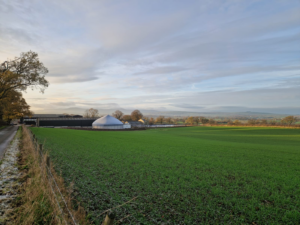
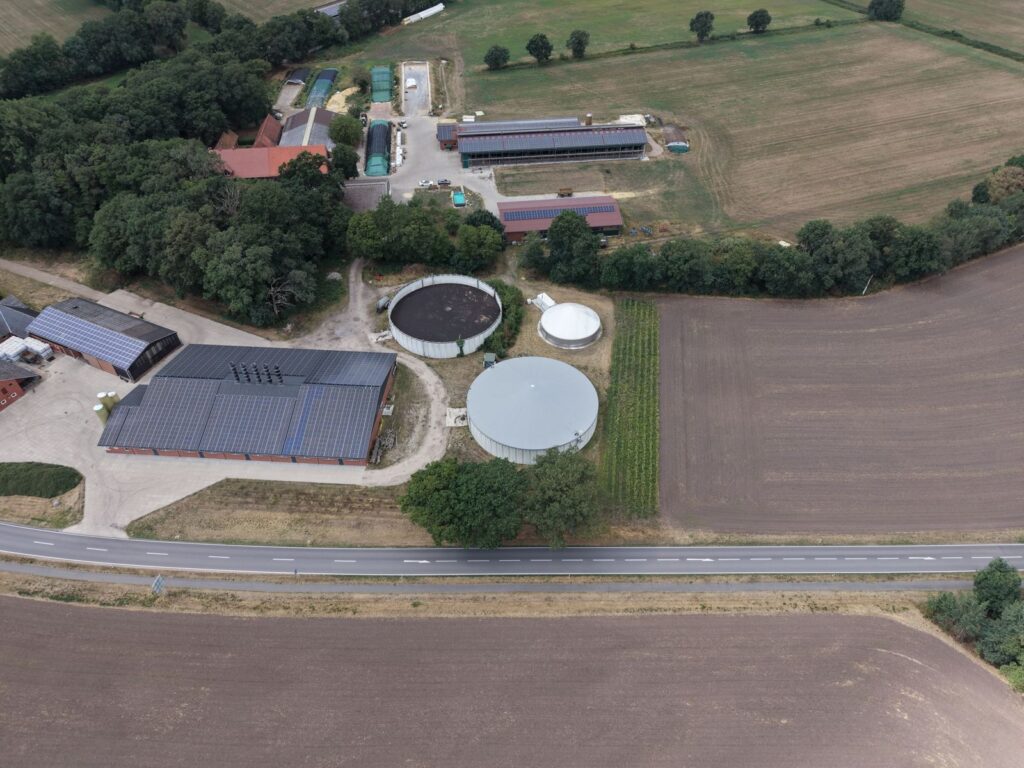
In Nordhorn in Lower Saxony, Germany, Andreas Groven (43) runs a dairy farm together with his parents, his wife, their three sons and an apprentice. The farm keeps 120 cows – a good 110 in milk – plus female young stock. Since May 2024, a 22 kW Biolectric farm digester has been turning the farm’s fresh slurry into electricity, heat and a more valuable fertiliser.
“What we were told we would achieve, we’ve actually beaten.”
A barn designed with slurry energy in mind
Using the slurry for energy was part of the plan long before the digester arrived. “We had always given thought to making use of the slurry,” says Andreas. When the barn was built, it was laid out with a solid, sealed floor so the slurry could be collected fresh and used to generate energy. That makes the farm an ideal fit for a Biolectric digester: fresh manure still holds most of its biogas potential.
Two reasons to act: electricity costs and fertiliser
The first reason was energy. Electricity prices had risen, and the idea was to get more out of the farm’s own slurry and become as self-sufficient as possible. “We don’t quite manage 100%, since we work with a conventional milking system – but we’re close to 100%.”
The second reason was fertiliser. For years the farm had worked with a neighbouring pig farm whose sow slurry gave the grassland a nice liquid fertiliser. When the neighbour changed the way he stored his slurry, the Grovens were left with only their own relatively thick cow slurry. Digestion solves that: the digestate is a fertiliser whose nutrients are more readily available to the plants and that can be used optimally on the grassland.
An investment in price security
Andreas is refreshingly honest about the economics. “It’s not the case that the system turns you into a huge revenue driver,” he says. “It counts as an investment with which you fix your electricity price.”
Under the German Renewable Energy Act (EEG), the electricity the farm feeds into the grid earns a fixed tariff for 20 years. For a farm that uses around 90,000 kWh a year, that predictability matters. “For me, that’s security. I hedge my electricity price with my own slurry, and I upgrade my own slurry at the same time.”
“As long as I keep cows and the cows give their manure, I have my electricity.”
A lower carbon footprint for the milk
The Grovens supply their milk to Arla, a dairy that is very active on sustainability and carbon footprint and wants to show that farmers help reduce the footprint of their products. “We already benefit from that now, when we calculate and reduce our carbon footprint,” says Andreas. “And I believe it will come into play even more in the future.” For him, the digester was the logical next step: upgrading the slurry and improving the sustainability of the farm’s milk.
Only 5 to 10 minutes of work a day
“As a dairy farm, you already have an awful lot of work – seven days a week,” says Andreas. A low workload was therefore a key requirement.
The daily routine is a quick round: a glance at the smartphone app to see whether everything is running smoothly, a look inside the container and logging how much slurry has gone through. “Per day, including the walk over here, that’s 5 to 10 minutes at most.”
Every 800 operating hours the engine needs a service – an oil change and new spark plugs – which Andreas carries out himself. “In the early days it took 20, 25 minutes. By now I manage it in a good quarter of an hour.” The occasional small fault, such as a lump blocking the pump, he fixes himself. “The service team does good work and is always reliable. The system runs, and that’s our goal, after all.”
Results that beat the forecast
Before the investment, Biolectric calculated what the digester would deliver on the Groven farm. “If I’d been promised golden apples from the sky and they hadn’t been delivered, I’d have been disappointed,” says Andreas. “But what we were told we would achieve, we’ve even beaten.”
That was his aim from the start: with a solid barn floor, fresh slurry and a high milk yield, the digester should run close to 100% of the time – and it does. “We would choose the system again, just as it stands here. All in all, I’m thoroughly satisfied.”
Discover what Biolectric can do for your farm
Would you like to know how much electricity your farm could generate from its own manure? Contact Biolectric to explore the possibilities, or read how other dairy farmers already produce their own energy with a Biolectric digester.